
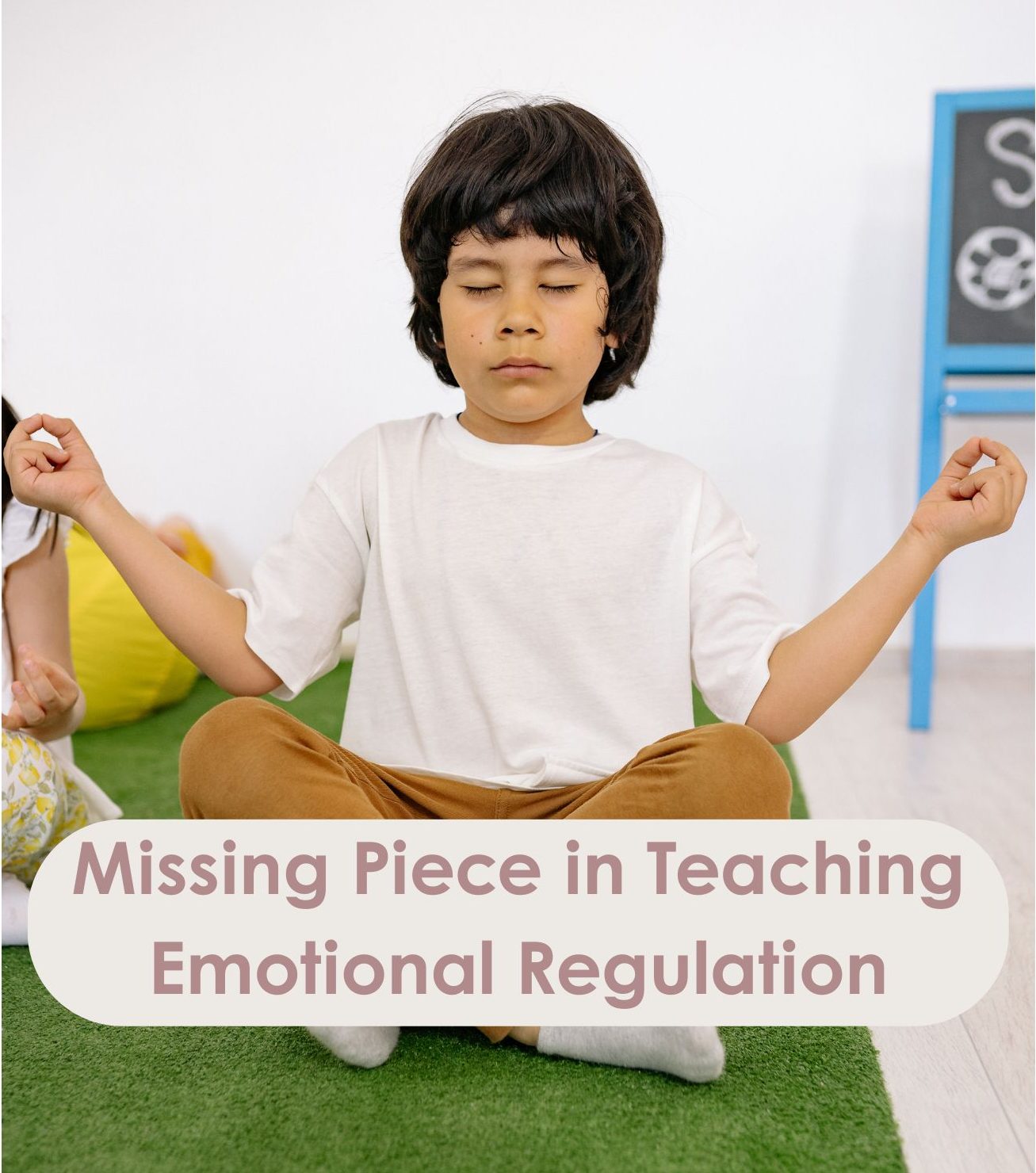
Kids and adults alike can have some BIG feelings. Teaching social and emotional skills can be so tough! I’ve definitely struggled with this (especially as a person who is learning regulation techniques right along with my child). If we are only teaching these skills in the moment, we are missing a key piece in helping them learn to regulate their big emotions.

We practice tying shoes, math, reading, all kinds of skills with our kids so they can perfect it. But, I think we often forget about practicing social and emotional skills. We may talk to our kids before an event about what to and not to do, but if we really want it to stick, we have to practice at other times.
What can this look like?
- Role playing what to say when a peer says something unkind.
- Repeating phrases to say to advocate for themselves.
- Taking deep breaths or other regulating techniques when they aren’t already upset.
Why does this work?
Well first of all, if a child is already dysregulated, they can’t learn effectively. Their logical brain shuts off. You can’t get through to them. Think of the last time you were upset? Were you hearing anything someone was telling you? Probably not. Not until you were able to calm down anyway.
Second, the more you practice something the “right” way, the more likely the child will be able to pull from that when needed. We can practice so it becomes more automatic they more they do it. Then when the time comes for them to stand up for themselves, work through heightened emotions, or face a tricky situation with a peer, they’ll be more likely to know and feel confident in what they should do.
Bonus Tip: Once you’ve practiced with your child, the next time you run into one of these tricky situations, try to catch your child before they get too dysregulated. You can then work through these things in real time and it will help even more!
These tips go for any number of social and emotional skills, not just the few examples above. And, it works for adults too! Practice your own regulation techniques so it’s that much easier for you when you need them!